Tunneling & Full Sewer Re-Pipe: When You Really Need It
Huge quote for a tunneling and full sewer re-pipe? Learn when you really need it, how to get a solid second opinion, and how to compare major plumbing quotes.
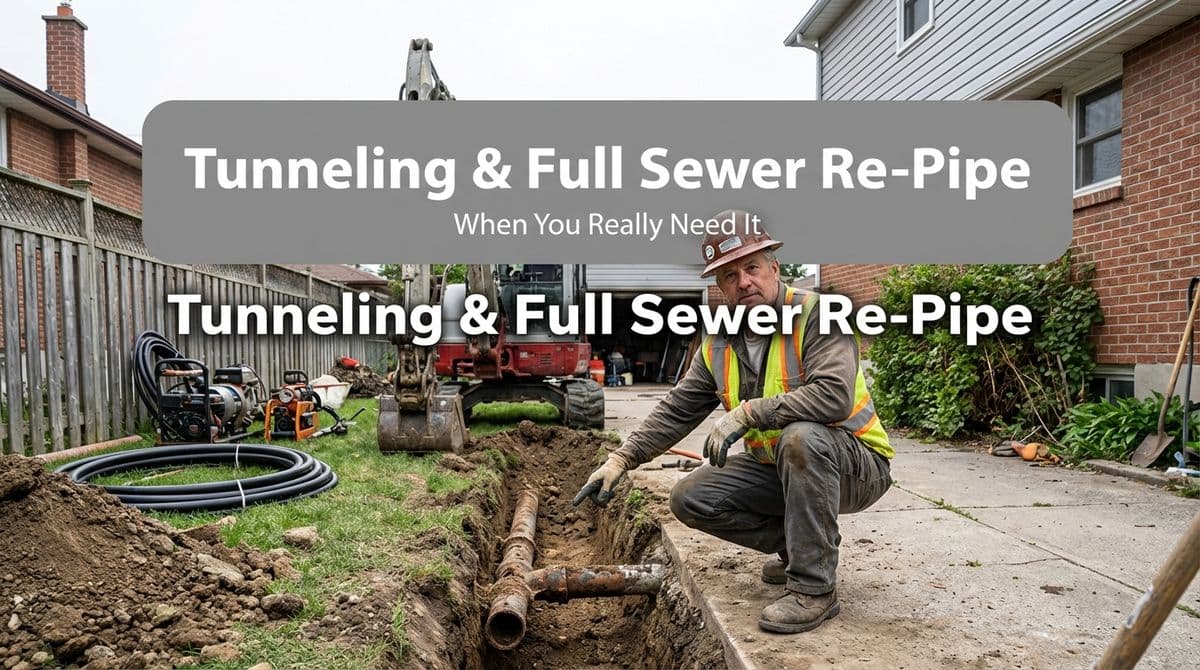
Why This Homeowner Questioned a Major Sewer Quote
We recently got a call from a homeowner — let’s call her Lisa — who sounded a little stressed. She and her husband had just been told they needed a full sewer drain re-pipe with tunneling under the house. The price? Let’s just say it was high enough that they immediately started looking for a second opinion.
Lisa said, “We were quoted for a tunnel job and re-piping our whole drain system. We just want to compare quotes and make sure this is really what we need.” That’s a smart instinct. When someone recommends digging tunnels under your slab and replacing every drain in your home, it’s a big deal — and a big check.
In this post, we want to walk you through when a tunneling job and full sewer drain re-pipe really makes sense, when it might be overkill, and how to get a good second opinion and compare quotes on major plumbing repairs.
What Is Tunneling and a Full Sewer Drain Re-Pipe?
When Lisa mentioned a “tunnel job,” we knew exactly what she meant. In many slab-on-grade homes, the drain and sewer lines run under the concrete foundation. If one or more of those lines fail, there are two main options:
- Break through the slab from above (inside the house) to access and repair/replace the pipe.
- Dig a tunnel from outside the home and work underneath the slab to reach the bad section of pipe.
A tunneling job means a crew digs an access tunnel under the foundation to reach the damaged drains. A full sewer drain re-pipe means replacing most or all of the old drain lines under the house instead of repairing just one section.
When a Full Re-Pipe with Tunneling Really Makes Sense
We never recommend tunneling and full re-piping lightly. It’s usually warranted when we see one or more of these situations:
- Multiple major breaks or collapses in the drain lines under the slab.
- Severe, active leaks that are washing out soil and jeopardizing the foundation.
- Extensive root intrusion and cracking throughout the system, not just in one spot.
- Very old, failing materials (like cast iron that’s heavily corroded or rotted out) along long stretches.
- Chronic backups and slow drains that keep returning even after proper cleaning and spot repairs.
If inspections and testing show that most of the system is compromised, then tunneling and re-piping can actually be the most cost-effective long-term solution. Instead of patching one section at a time and paying to tunnel again and again, you address everything at once.
Warning Signs You Shouldn’t Ignore
Before Lisa called us, she had seen some symptoms that made her take the first company’s quote seriously. Here are common red flags that may point to major sewer issues under your slab:
- Frequent backups in multiple fixtures (toilets, tubs, showers) at the same time.
- Gurgling drains or toilets after other fixtures are used.
- Sewage odors inside or outside the home.
- Unexplained wet spots in the yard, especially near the foundation.
- Cracks in walls, doors sticking, or uneven floors that may point to foundation movement from leaking pipes.
These don’t automatically mean you need a full re-pipe, but they do mean you need a thorough inspection — not just a quick look.
How to Get a Solid Second Opinion
Like Lisa, if you’ve been told you need tunneling and a full drain re-pipe, we strongly recommend a second opinion. Here’s how to make that visit count:
1. Ask for a Camera Inspection (and to See the Footage)
We always prefer to run a sewer camera through the lines whenever possible. For a major repair, you should:
- Ask the plumber to show you the live video and point out breaks, cracks, or offsets.
- Request photos or a copy of the video if possible, especially if you’re comparing multiple quotes.
- Make sure they identify where in the line each problem is located (kitchen branch, main line, bathroom, etc.).
2. Get a Clear Written Scope of Work
When Lisa called, she knew she had a quote, but she wasn’t sure exactly what was included. For a job this big, your written estimate should spell out:
- Which lines are being replaced (kitchen, bathrooms, main sewer, etc.).
- How many feet of pipe and what pipe material will be used.
- Where tunneling will occur and how access will be restored and backfilled.
- Any surface repairs (landscaping, concrete, flooring) that are included or excluded.
- Permits and inspections — who is handling them and if they’re in the price.
Comparing Quotes: It’s Not Just About the Number
On the phone, we told Lisa something we see often: if you went with a big company, the quote is probably high, high, high. We’ve helped homeowners with tunnel jobs for about a quarter of the price some large companies charge — without cutting corners.
When you compare quotes, look at more than just the bottom line:
- Scope: Are both companies replacing the same length and sections of pipe, or is one doing more/less?
- Materials: Are they using quality PVC or another appropriate pipe, with proper fittings and supports?
- Warranty: How long is the warranty on both labor and materials? Is it in writing?
- Access method: Is it all tunneling, or a mix of tunneling and spot slab cuts? Why?
- Company size vs. overhead: Bigger isn’t always better. Larger companies often have higher overhead — and higher prices.
Questions to Ask Before You Say “Yes”
Before you sign off on a tunneling and re-pipe job, we suggest asking any plumber these questions:
- “Can you show us exactly which lines are bad and why you recommend full replacement instead of spot repairs?”
- “What are the risks if we do a partial repair instead?”
- “How long will the job take, and can we stay in the house during the work?”
- “What will everything look like when you’re done — inside and outside?”
- “What is and isn’t included in this price?”
When You Should Definitely Get Another Opinion
You should almost always get a second opinion if:
- You were given a huge quote quickly with little explanation or no camera inspection.
- The plumber can’t clearly show or explain the issues.
- You feel pressured with “today only” discounts on a major repair.
- The scope is “replace everything” without proof that everything is failing.
Lisa did exactly the right thing: she scheduled us to come out the next morning to inspect the system ourselves, walk through what we found, and give a detailed, competitive quote. That way, she and her husband could make a confident decision instead of an anxious one.
Need a Second Opinion on a Tunneling or Re-Pipe Quote?
If you’ve been told you need a tunneling job and full sewer drain re-pipe, we’re happy to come out, take a thorough look, and explain your options in plain language. Sometimes a full re-pipe really is the smart move. Other times, a targeted repair and proper maintenance can buy you many more years.
Either way, you deserve to see the evidence, understand the scope, and compare quotes that make sense. That’s exactly what we helped Lisa do — and what we’d be glad to do for you.